· A Toca · 5 min read
São Roque Church in Lisbon: What to See and Where to Dine across the River
São Roque was the first Jesuit church in Portugal, it stood through 1755, and its flat ceiling is painted to look domed. Opening times, prices, how to get there and where to eat afterwards in Cacilhas.
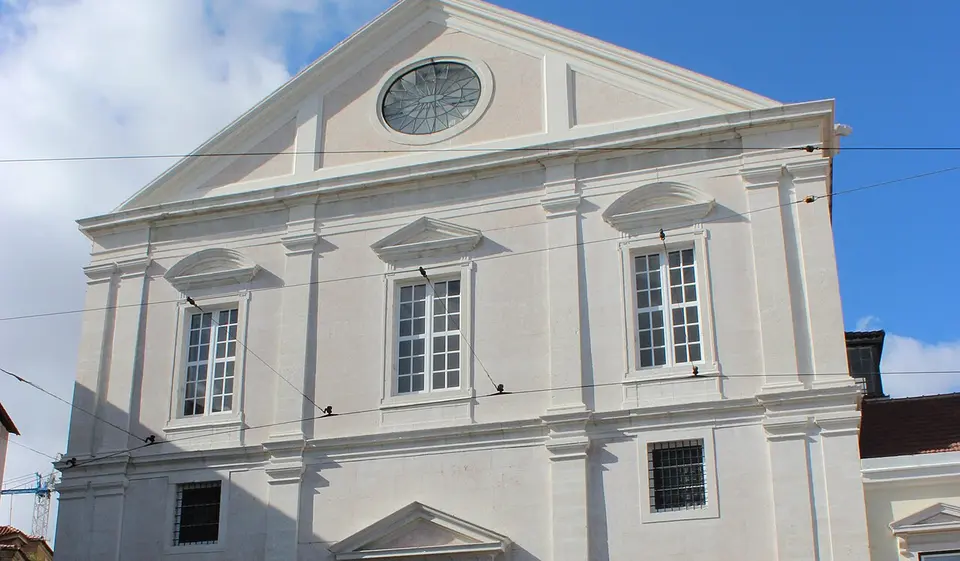
São Roque Church, on Largo Trindade Coelho in Lisbon, is worth a visit for three reasons: it was the first Jesuit church in Portugal, it came through the 1755 earthquake, and its flat ceiling is painted in perspective to look domed. From October to March it opens Tuesday to Sunday, 10am to 6pm. If you go in the afternoon, you can then head down to Cais do Sodré, take the ferry and have dinner in Cacilhas, on Rua Cândido dos Reis.
What was on this site before the church?
The history of the site mentions a cemetery for plague victims, outside the city walls, in a thinly populated area. In 1506 local people built a hermitage there dedicated to Saint Roch (São Roque), the saint who, according to tradition, recovered from the plague, and the place became a pilgrimage site.
King Manuel I asked Venice for a relic of the saint to protect Lisbon, and the relic was placed in that hermitage, in the Bairro Alto. Later, King John III handed the land to the Jesuits, who set up their headquarters there and built the church from the end of the 16th century. After the Jesuits were expelled, the church and the residence passed to the Santa Casa da Misericórdia de Lisboa, which still runs them today.
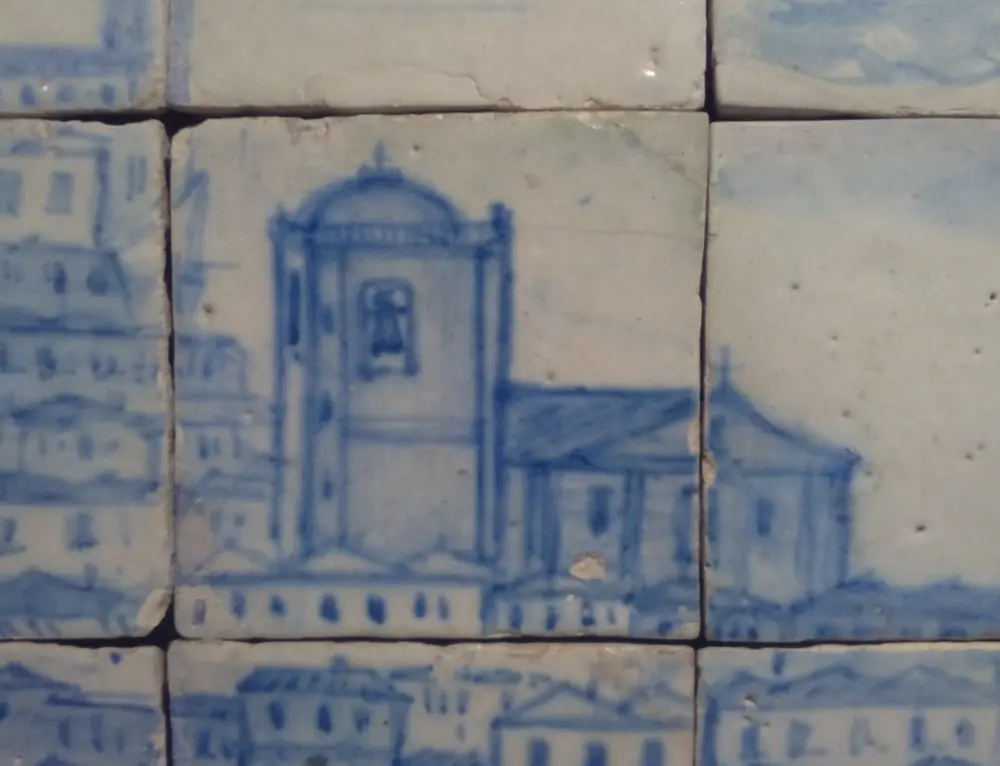 Lisbon before the 1755 earthquake: São Roque Church in an early 18th-century tile panel, now in the National Tile Museum. Photo: RickMorais, via Wikimedia Commons, CC BY-SA 4.0.
Why does the ceiling look domed?
The ceiling of the nave is flat. The painting was done between 1584 and 1590 and uses perspective to fake architecture in relief. Francisco Venegas painted the fake architectural details and, in one of the vaults, probably portrayed himself. Amaro do Vale later painted the central medallion and the biblical scenes around the edge.
It is one of the very few 16th-century ceilings in Lisbon. It survived 1755 thanks to an anti-seismic system of flexible beams that did not break in the quake.
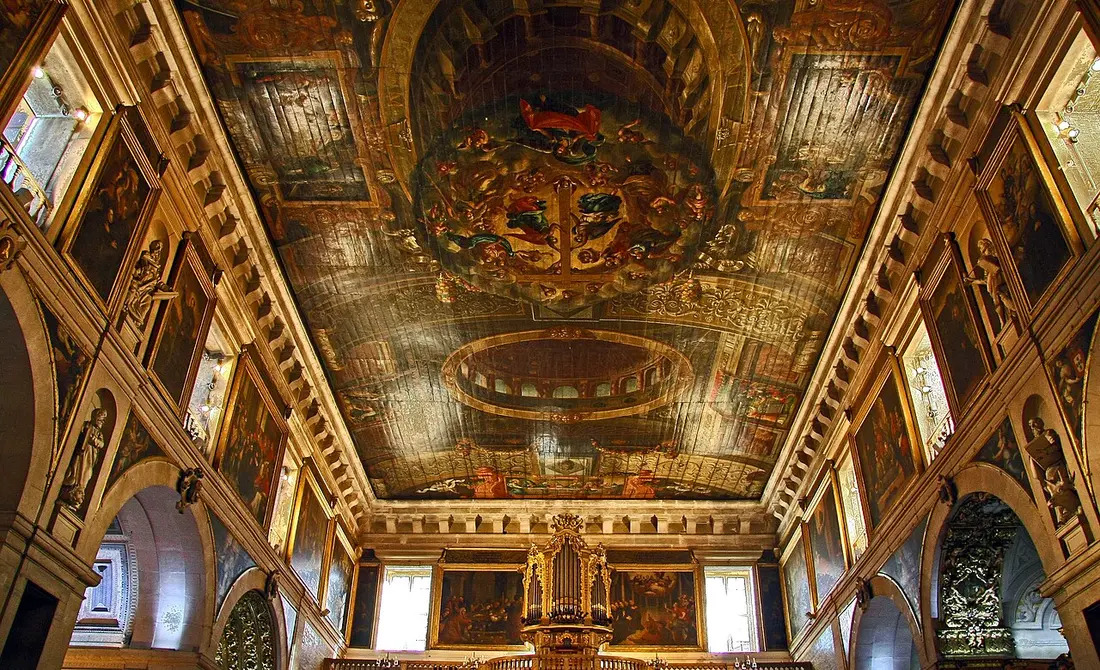 The flat ceiling of the nave, with its false vaults painted in perspective. Photo: Vitor Oliveira, via Wikimedia Commons, CC BY-SA 2.0. Image cropped.
What is in the Chapel of Saint John the Baptist?
It is the church’s best-known chapel. It was commissioned in Italy by King John V in 1742, reached Lisbon in 1747 and was assembled in 1749. The pictures are mosaics by Mattia Moretti, made from cartoons by Masucci, showing the Baptism of Christ, Pentecost and the Annunciation. It is believed to have been the most expensive chapel in Europe at the time.
The chapel’s collection is part of the São Roque Museum, next to the church, and has been classified as a National Treasure.
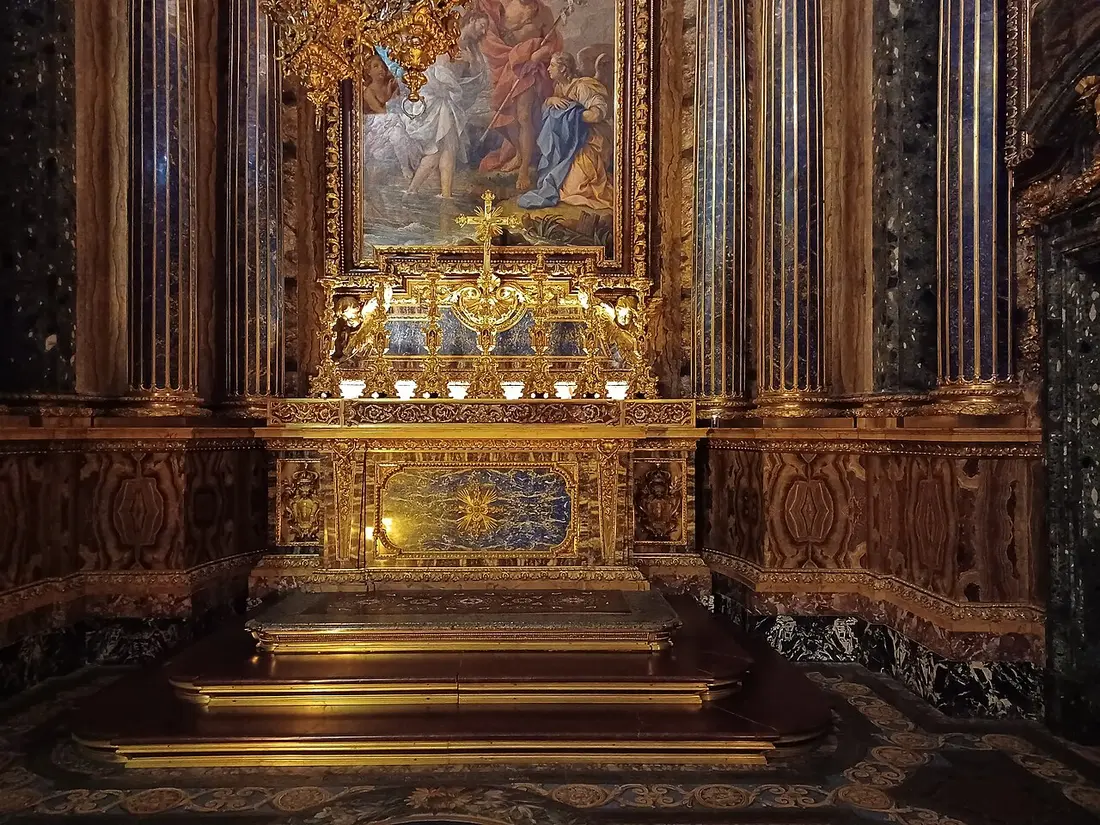 The Chapel of Saint John the Baptist. Photo: Simon Burchell, via Wikimedia Commons, CC BY-SA 4.0.
What time does it open and how much does it cost?
The church and the museum have different hours, and visits to the church are restricted during religious services (Mass Tuesday to Sunday at 12.30pm).
- Church, October to March: Monday 1pm to 6pm; Tuesday to Sunday 10am to 6pm.
- Church, April to September: Monday 1pm to 7pm; Tuesday to Sunday 10am to 7pm.
- Museum: Tuesday to Sunday, 10am to 6pm. Access to the exhibitions closes 30 minutes before the museum does.
General admission is €8, with a 50% discount for over-65s, students under 25 and Lisboa Card holders. Children up to 12 go free. On Sundays and public holidays, until 2pm, entry is free for residents of Portugal. Tickets are bought on site. Prices and hours are those given on the museum’s website and may change, so check before you go.
How do you get there?
The museum lists these options: metro to Baixa-Chiado station (blue and green lines), bus 758, tram 24 or 28 (Largo Camões) or the Elevador da Glória. There is parking at Largo Camões and on Rua Almirante Pessanha, by the Carmo.
And afterwards, where to eat?
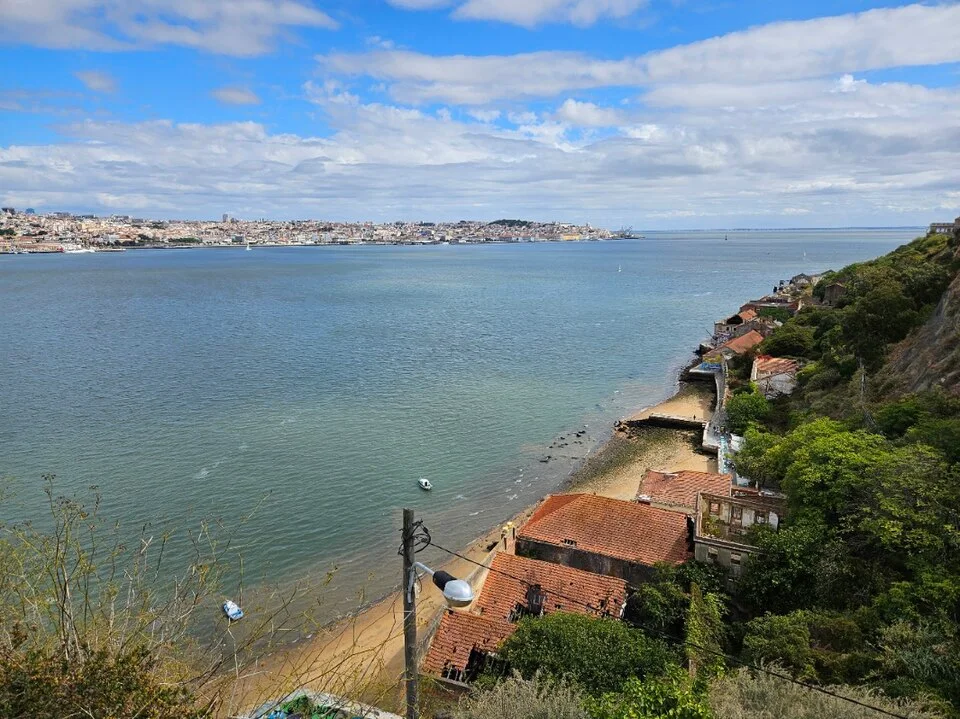
The church closes at 6pm between October and March, which leaves the evening free to cross the river. The ferry to Cacilhas leaves from the Cais do Sodré river terminal, and the timetable for the route is on the Transtejo & Soflusa website (ttsl.pt). In Cacilhas, Rua Cândido dos Reis is just beyond the terminal.
A Toca is at number 93 and has been serving Portuguese cooking since 1985. After an afternoon looking at ceilings and gilded woodwork, the menu is easy to read. Octopus à Lagareiro (roasted in olive oil with potatoes) and Bacalhau à Casa (the house salt cod) are the two house specialities. There are also clams à Bulhão Pato, dogfish soup, fish stew and, for meat eaters, grilled marbled beef. You can see everything on the menu and book a table through Contact.
 Octopus à Lagareiro, one of the house specialities at A Toca. Photo: A Toca.
Summary: visit and dinner
| Where | Largo Trindade Coelho, Lisbon |
| Church (October to March) | Monday 1pm to 6pm; Tuesday to Sunday 10am to 6pm |
| Church (April to September) | Monday 1pm to 7pm; Tuesday to Sunday 10am to 7pm |
| General admission | €8 (50% off: over 65s, students under 25, Lisboa Card) |
| Transport | Metro Baixa-Chiado, bus 758, trams 24 and 28, Elevador da Glória |
| Afterwards | Ferry from Cais do Sodré to Cacilhas, dinner at Rua Cândido dos Reis, 93 |
Sources: São Roque Museum (information) and Wikipedia (Portuguese), Igreja de São Roque.
Cover image: “Exterior of Igreja de São Roque (Lisbon)”, by Uhooep, via Wikimedia Commons, licensed under CC BY-SA 4.0. Image cropped, shared under the same licence.

A Toca
O melhor restaurante de Cacilhas, Almada. Pratos tradicionais de peixe, marisco e carne com o melhor da cozinha portuguesa, marisqueira e vinhos da casa.